The Tortoise Table   
 Search

Introducing a New Diet

Why do we need to encourage our tortoises to eat a healthy diet if they are already eating? 

Once we receive our tortoise we often find that we have been given the wrong advice on how to feed: sometimes we re-home and the previous owner has been feeding an incorrect diet; or we may have been given the wrong information on diet if the tortoise was bought from somewhere other than a respected breeder.  Whatever the reason, we do know that feeding the incorrect diet is detrimental to a tortoise’s health in the long run and it is up to us to try and get it right.

There are a few tricks that you can try to encourage a healthy tortoise to adjust to a new diet (but be advised that the time it takes for your tortoise to decide to eat healthily can be a traumatic time for you).

First of all you need to be strong and don’t back down, be consistent and keep to a regular feeding pattern. 

Be discreet!  Once you have placed the food, back away with no fuss and observe from a distance.  Tortoises love spectators and they have the ability to sense your presence within a distance of 10 miles (well it seems like that anyway!)

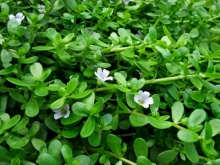
• A natural habitat can often encourage a tortoise to eat well.  If there are plenty of weeds and flowers growing (and grass if you have Leopards, Sulcata or any other grazing species) where the tortoise can easily pick its own, you will probably find, on peeping from the kitchen window, your tortoise happily grazing a bunch of wonderful fresh weeds it has found growing in the garden.

• Sneak in good food without your tortoise knowing.  Cut it up into very small pieces and add it slowly to the tortoise's existing diet, increasing the volume bit by bit, while gradually offering less of the old diet. This could take some time but if you go slowly and are consistent then there’s no reason why it shouldn't work.

• The smell of a cucumber is often enough to tempt even the most stubborn of tortoises. Juices from a cucumber smeared over some weeds, or the thinnest of slithers can fool some tortoises (but not all of the time).  This often works well once the tortoise has started eating weeds and sometimes needs a little encouragement to carry on.

• Moistening the food and mixing the new and old together will make it almost impossible for the tortoise to separate pieces that are stuck together, and at least some of the new diet will be ingested, especially if the old and new diets are cut up into very small pieces.  Once a pattern is established, the amount of food from the old diet can be decreased while increasing the new diet.

• For arid and semi-arid species you can try finely chopping dried grasses and moistening it with warm water to release the sweet smell before mixing it with the weeds and flowers.  This is especially helpful during the winter when store-bought food needs to be bulked up for non-hibernating, grass-eating species needing a good fibrous diet.

A few things to remember before you cave in and revert back to the old diet:
• A healthy tortoise almost certainly has more will power than you do.
• A healthy tortoise can go for weeks without eating anything, and providing it is fully hydrated no harm will be done.
• A healthy tortoise will not starve itself.
• A healthy tortoise loves to watch you squirm and agonise while deciding if today is going to be the day you give in.

Once your tortoise has got a taste for a natural diet its health will go from strength to strength, its long term health will improve and its shell will start to grow normally. 


Quite simply, your tortoise needs to be eating a diet as close as possible to what it would be eating in the wild and not what’s on offer in the shops, and only you can help make the change.


                                                                                                          © The Tortoise Table, 2012.  All rights reserved.


Web Designer - Beework Web Design